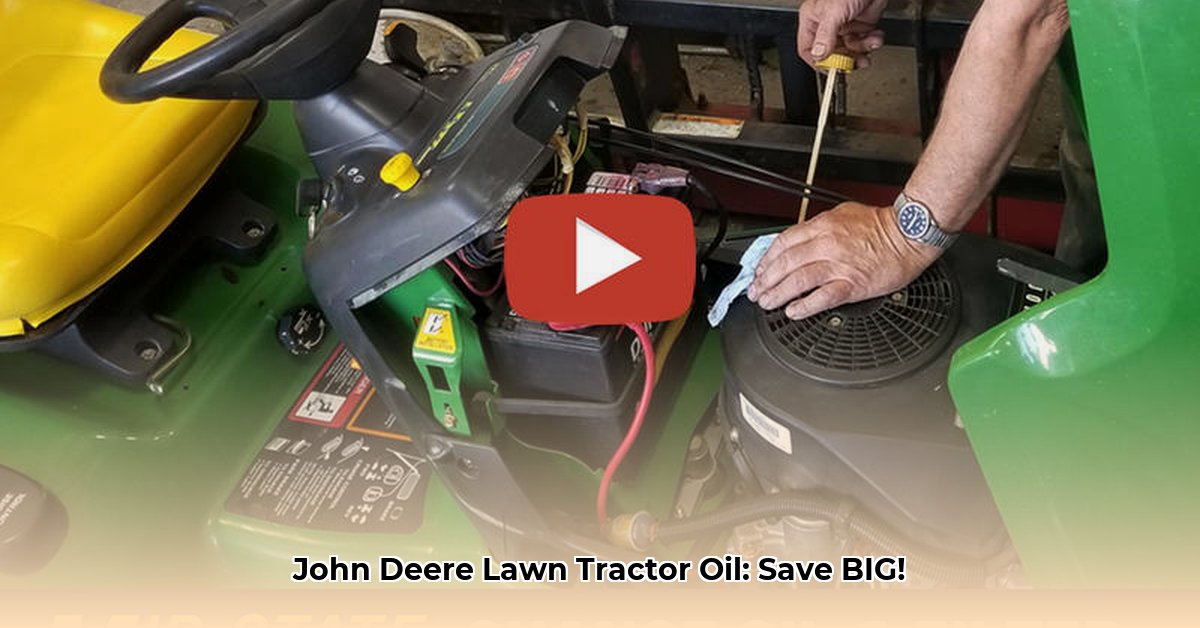
This guide provides clear, actionable steps to help you choose and change the oil in your John Deere lawn tractor, saving you money without compromising performance. We'll cover oil viscosity, climate considerations, alternative oil brands, and a step-by-step oil change guide, all while maintaining Consumer Reports-style objectivity and clarity. For more info on hydraulic tractor oil, check out this helpful resource.
Understanding Oil Viscosity: The Thickness Matters
Oil viscosity refers to its thickness. Think of honey (high viscosity) versus water (low viscosity). Your John Deere's engine needs oil with the correct thickness for optimal performance. Too thick, and the engine struggles; too thin, and parts aren't adequately protected. Your owner's manual specifies the ideal viscosity grade (e.g., 10W-30, 5W-30, 15W-40) for your model. The number before the "W" indicates cold-weather performance, while the number after reflects high-temperature performance. Lower numbers mean better cold-weather flow. Isn't it important to choose the right viscosity for your climate?
Choosing the Right Oil: Climate and Your Manual are Key
Selecting the correct oil viscosity directly impacts your engine's longevity. In hot climates, a higher viscosity oil (like 15W-40) prevents breakdown under heat. In colder climates, a lower viscosity oil (like 5W-30) ensures easy starting and lubrication. But what's the best approach? Always consult your owner's manual. It provides specific recommendations for your tractor's engine and model, tailored to its unique needs and operating conditions. Ignoring this advice risks premature engine wear and costly repairs.
John Deere Oil vs. Alternatives: Saving Money Smartly
John Deere sells its branded oil, which is convenient but often expensive. High-quality alternatives exist that often perform equally well at a lower cost. The key is to find an oil meeting the American Petroleum Institute (API) standards and the viscosity grade specified in your manual. Reputable brands like Shell Rotella T and Mobil 1 are excellent choices, offering strong engine protection at competitive prices. Are these alternatives as good as the name brand? Many experts believe they offer comparable or even superior performance in some cases.
Performing an Oil Change: A Step-by-Step Guide
Changing your lawn tractor's oil is straightforward. While this is a general guide, always consult your owner's manual for model-specific instructions.
Step 1: Warm-up. Run the engine for a few minutes to warm the oil.
Step 2: Secure and Level. Park on a level surface and engage the parking brake.
Step 3: Locate the Drain Plug. Underneath the engine, this plug releases the old oil. Have a drain pan ready.
Step 4: Drain the Oil. Carefully remove the plug, letting the oil drain completely (15-20 minutes).
Step 5: Replace the Drain Plug. Tighten securely, but avoid overtightening.
Step 6: Locate the Filler Cap. Usually marked with an oil can symbol.
Step 7: Add Fresh Oil. Use the correct amount specified in your manual.
Step 8: Replace the Filler Cap. Secure it tightly.
Step 9: Check the Oil Level. Run the engine briefly, then check with the dipstick and add more if necessary.
Frequently Asked Questions (FAQ)
Q: Can I use any oil? A: No. Only use oil meeting your manual's specifications. Using the wrong oil can severely damage your engine.
Q: How often should I change my oil? A: Your owner's manual specifies the interval (typically 25-50 hours or annually).
Q: What happens if I use the wrong oil? A: At best, reduced engine lifespan; at worst, costly engine damage.
Cost Comparison: Balancing Quality and Price
| Oil Type | Approximate Cost (per quart) | Pros | Cons |
|---|---|---|---|
| John Deere Branded Oil | Higher | Convenient, potential warranty benefits | Significantly more expensive |
| Shell Rotella T | Moderate | Proven performance, widely available, affordable | May not be specifically formulated for your engine |
| Mobil 1 | Moderate to High | Excellent quality, long-lasting protection | Often more expensive than Rotella T |
Regular maintenance, including timely oil changes, is crucial for your John Deere's longevity. Using this guide and choosing the right oil will keep your machine running smoothly and save you money in the long run. Remember to always consult your owner's manual for model-specific instructions and recommendations.